The Paradox of Predictions: Why Foresight in Finance May Lead to Misguided Certainty
Financial markets thrive on predictions, yet experts warn that an overreliance on forecasting can breed dangerous overconfidence. While analysts and algorithms attempt to foresee market trends, historical data reveals that even the most sophisticated models frequently miss the mark. This paradox raises critical questions about the role of prediction in finance—and whether certainty is ever truly attainable in an inherently unpredictable system.
The Allure and Illusion of Financial Forecasting
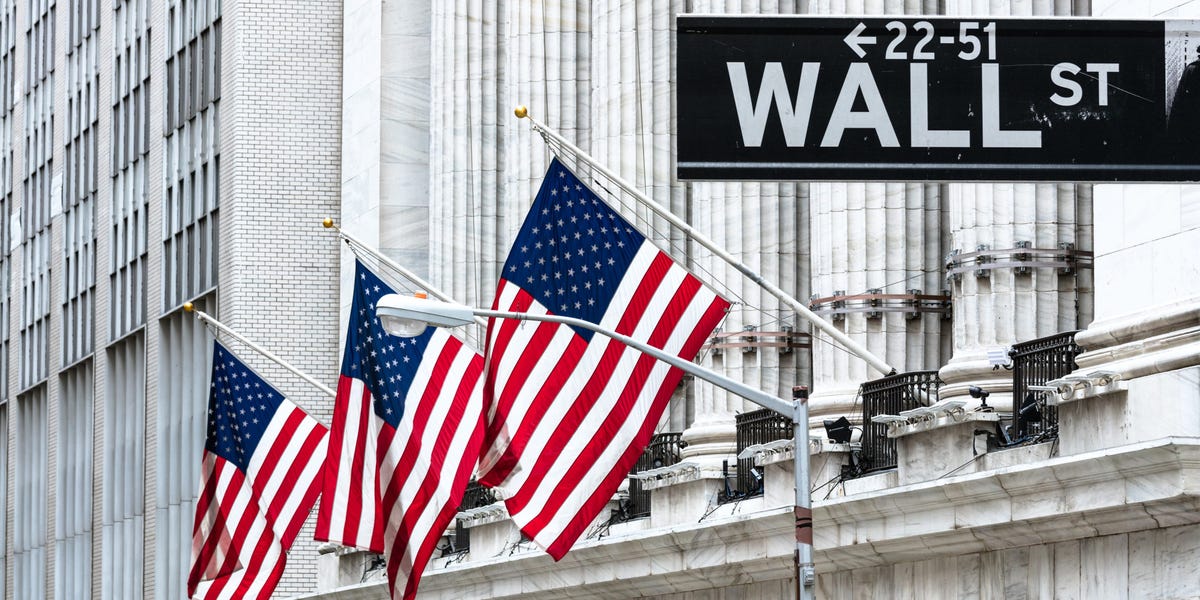
From Wall Street to cryptocurrency forums, predictions dominate financial discourse. A 2022 study by the Cambridge Centre for Alternative Finance found that 78% of investment firms rely on predictive analytics, yet fewer than 30% consistently outperform the market. This gap highlights a troubling disconnect: the more we seek clarity, the more elusive it becomes.
“Forecasts give the illusion of control,” says Dr. Elena Torres, a behavioral economist at Stanford University. “Markets aren’t chessboards with fixed rules—they’re complex ecosystems influenced by geopolitics, human psychology, and black-swan events.” Her research shows that overconfident investors underperform by an average of 4.7% annually, often due to overtrading or ignoring contradictory data.
The High Cost of Overconfidence
History brims with examples of failed predictions. In 2007, credit rating agencies assigned AAA ratings to mortgage-backed securities days before their collapse. Similarly, a Bloomberg survey of 2023 recession forecasts showed a 92% discrepancy among economists—proof that consensus is rare. Overconfidence isn’t just harmless speculation; it has tangible consequences:
- Market volatility: Herd behavior triggered by bullish or bearish predictions amplifies swings.
- Individual losses: Retail investors often chase trends too late, buying high and selling low.
- Systemic risk: Institutions relying on flawed models may underestimate tail risks.
Some experts advocate for probabilistic thinking instead of deterministic forecasts. James Carter, a hedge fund manager, notes, “We assign likelihoods, not absolutes. Saying ‘there’s a 60% chance of a rate cut’ acknowledges uncertainty—it’s more honest than claiming to know.” Firms like Bridgewater Associates now use “scenario planning,” weighing multiple outcomes rather than betting on one.
Technology also plays a dual role. While AI improves data analysis, it can’t eliminate randomness. A MIT Sloan report found that machine-learning models trained on past data fail during unprecedented events (e.g., COVID-19). As Carter adds, “Algorithms excel at pattern recognition, but patterns aren’t laws.”
Implications for Investors and Institutions
For everyday investors, humility is key. Diversification and long-term strategies outperform reactive trading. Institutions, meanwhile, face pressure to balance client expectations with transparency. “Admitting uncertainty builds trust,” argues Torres. “Clients prefer ‘We don’t know’ over false certainty.”
The future of finance may lie in adaptive frameworks—tools that stress-test portfolios against multiple scenarios while accepting unpredictability. Regulators, too, are scrutinizing overreliance on models, with the SEC proposing stricter disclosure rules for predictive analytics in 2024.
Conclusion: Embracing the Unknown
Prediction isn’t useless, but its limits must be acknowledged. As markets evolve, so must our approaches—shifting from seeking certainty to managing risk intelligently. For those navigating financial decisions, the lesson is clear: Stay informed, stay flexible, and question anyone who claims to know tomorrow’s headlines.
Want to make smarter financial choices? Subscribe to our newsletter for data-driven insights without the hype.
See more CNBC Network