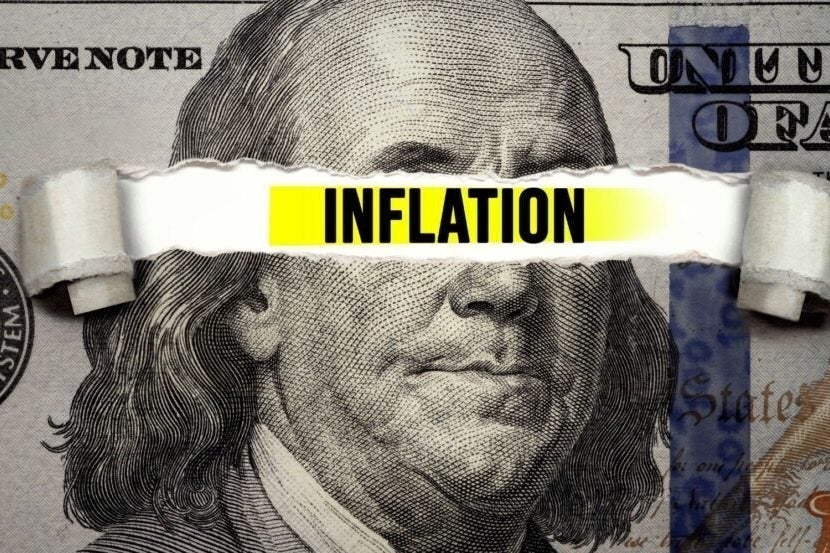
Inflation Fears and Wall Street’s Blind Spot: Analyzing Perspectives from Cathie Wood and Peter Schiff
In recent months, inflation fears have taken center stage in financial markets, prompting a wave of discourse around economic expectations. As prices continue to rise, notable figures in the investment world, such as Cathie Wood and Peter Schiff, have provided contrasting insights on the implications of these inflationary pressures. Wood, known for her optimistic outlook on disruptive innovation and technology, emphasizes how current inflation concerns are reshaping market dynamics. In contrast, Schiff, a staunch critic of mainstream economic narratives, argues that Wall Street is overlooking critical realities despite the mounting evidence of rising prices.
Understanding Inflation Fears and Their Impact
Inflation is a term that refers to the general increase in prices and the corresponding decrease in the purchasing power of money. This phenomenon can be triggered by various factors, including increased demand, supply chain disruptions, and expansive monetary policies. The recent surge in inflation has raised alarms among economists and investors alike, leading to a reevaluation of asset valuations and investment strategies.
- **Supply Chain Disruptions:** Global events, such as the COVID-19 pandemic, have led to significant supply chain challenges, contributing to higher production costs and price increases.
- **Monetary Policy:** Central banks, particularly the Federal Reserve, have maintained low-interest rates and engaged in quantitative easing, which has increased the money supply and further fueled inflationary pressures.
- **Increased Demand:** As economies reopen, consumer demand has surged, outpacing supply and leading to price hikes across various sectors.
As these factors converge, the unsettling reality of rising prices has become a focal point for investors trying to navigate the turbulent waters of the current economic landscape.
Cathie Wood’s Insight: A Transformative Shift
Cathie Wood, the founder and CEO of ARK Invest, has consistently advocated for innovation-driven investments. In her view, inflation fears present both challenges and opportunities. Wood argues that while inflation is a concern, the transformative potential of technology can ultimately mitigate its adverse effects.
Wood posits that sectors such as electric vehicles, genomics, and artificial intelligence are not only resilient in the face of inflation but may also benefit from it. Her belief is rooted in the idea that technological advancements can lead to increased efficiency and reduced costs over time, thus offsetting inflationary pressures.
- **Innovation as a Hedge:** Wood suggests that investing in disruptive technologies can serve as a hedge against inflation, as these companies are more likely to maintain pricing power and market share.
- **Long-Term Growth:** Despite short-term volatility, Wood emphasizes that long-term growth prospects in innovation-driven sectors remain robust, making them attractive even amid inflation concerns.
In her recent commentary, Wood stated, “Inflation can be a catalyst for innovation, prompting companies to enhance productivity and efficiency. The key is to focus on the sectors that will thrive in this environment.” This perspective highlights a proactive approach to investing, encouraging investors to look beyond immediate inflation fears and consider the broader implications of technological advancements.
Peter Schiff’s Critique: The Wall Street Blind Spot
On the other end of the spectrum, Peter Schiff, a prominent economist and financial commentator, has been vocal about his skepticism regarding Wall Street’s complacency in the face of rising inflation. Schiff argues that many investors are ignoring the fundamental realities of the economy, choosing instead to cling to a narrative that downplays the significance of inflationary trends.
Schiff asserts that Wall Street’s optimistic outlook is dangerously misplaced. He highlights that the Federal Reserve’s policies have created a distorted financial environment, masking the true impact of inflation. According to Schiff, rising prices are not just temporary; they signal deeper structural issues within the economy.
- **Inflation Misconceptions:** Schiff contends that many on Wall Street believe inflation will subside on its own, failing to recognize that inflationary pressures are often persistent and require significant intervention to control.
- **Asset Bubbles:** He warns that the current market rally is fueled by cheap money and that the eventual correction will be severe when the true costs of inflation become apparent.
In a recent interview, Schiff remarked, “Wall Street has a blind spot when it comes to inflation. They are living in a fantasy where rising prices are merely a passing phase, but the reality is far more severe.” His critique serves as a call to arms for investors to reassess their strategies in light of the prevailing economic conditions.
The Disconnect: Market Perception vs. Economic Reality
The contrasting views of Cathie Wood and Peter Schiff illustrate a significant disconnect between market perceptions and economic realities. While Wood champions innovation and the potential for long-term growth, Schiff emphasizes the dangers of complacency and the urgent need for awareness regarding inflation.
This divergence raises essential questions for investors:
- **How should investors balance the allure of innovation with the risks posed by inflation?**
- **Are current market strategies sustainable, or are they built on a foundation of denial regarding economic fundamentals?**
- **What role do central banks play in shaping investor sentiment and market expectations?**
These questions underscore the complexity of the current financial landscape and the need for a nuanced understanding of the interplay between inflation, market behavior, and investment strategies.
As inflation fears continue to dominate discussions on Wall Street, the insights provided by Cathie Wood and Peter Schiff offer valuable perspectives for investors. While Wood encourages a forward-looking approach focused on innovation and growth, Schiff serves as a cautionary voice, urging vigilance against the risks of inflation and market complacency.
Ultimately, the path forward for investors will require a careful assessment of both technological advancements and economic fundamentals. By navigating the complexities of inflation fears and recognizing the potential disconnect between market perceptions and reality, investors can better position themselves for the challenges and opportunities that lie ahead.
In a rapidly changing economic landscape, staying informed and adaptable is paramount. Whether through embracing innovation or critically evaluating the broader economic context, the choices made today will shape the investment landscape of tomorrow.
See more CNBC Network