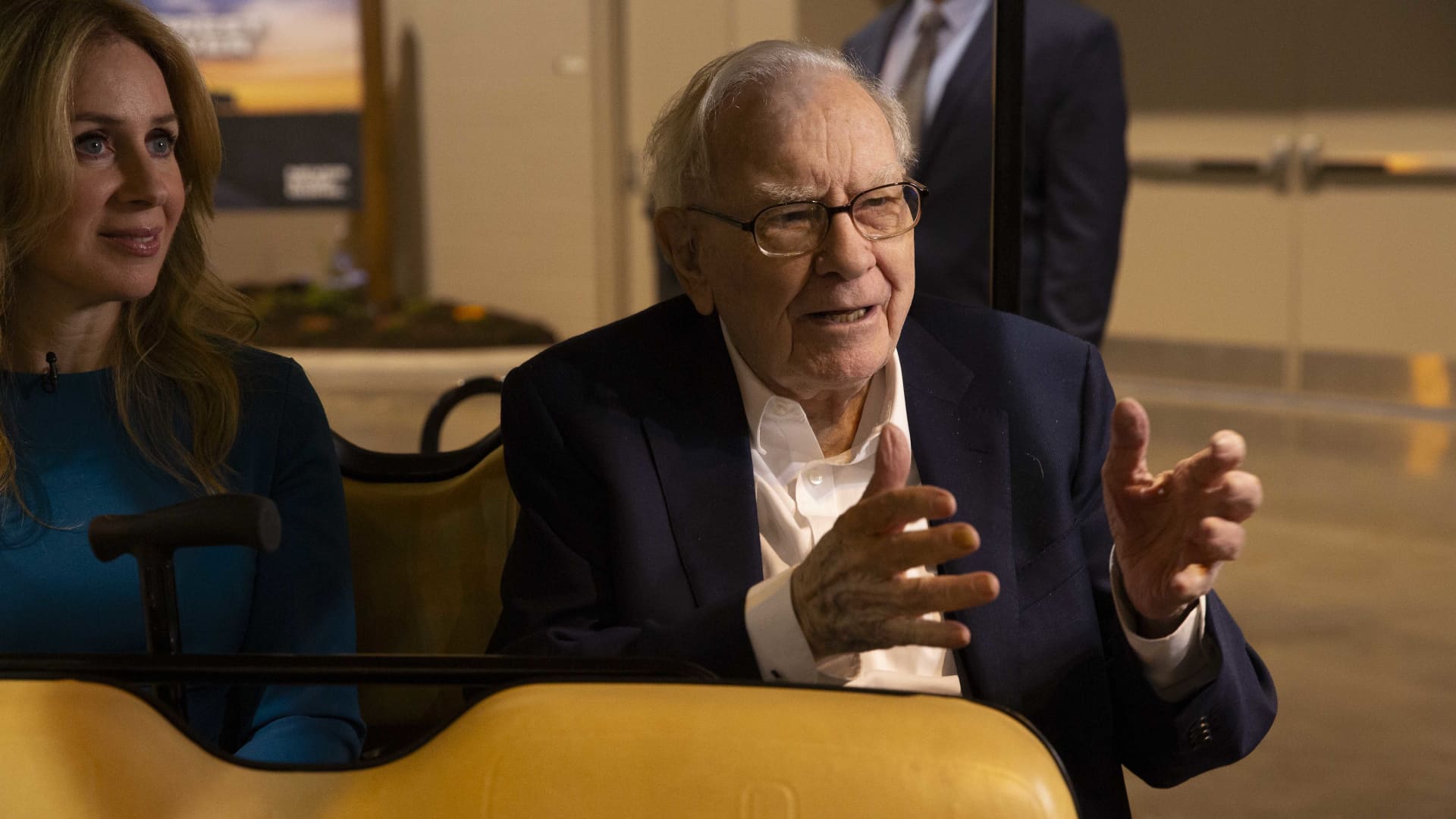
Unveiling Warren Buffett’s Timeless Wealth-Building Strategy Amid Market Turbulence
Warren Buffett, the legendary investor and CEO of Berkshire Hathaway, has long championed a simple yet powerful rule for building wealth: “Be fearful when others are greedy, and greedy when others are fearful.” Amid recent market volatility, this contrarian philosophy continues to guide investors toward long-term success. Buffett’s strategy emphasizes patience, disciplined investing, and a focus on intrinsic value—principles that have helped him amass a $100 billion fortune over seven decades.
The Core Principles of Buffett’s Investment Philosophy
At the heart of Buffett’s approach lies a commitment to value investing, a methodology he learned from his mentor Benjamin Graham. This strategy involves identifying undervalued companies with strong fundamentals and holding them for extended periods. Key elements include:
- Margin of safety: Buying stocks at prices significantly below their intrinsic value
- Economic moats: Prioritizing businesses with durable competitive advantages
- Long-term orientation: Maintaining investments through market cycles
“Buffett’s genius lies in his ability to ignore short-term noise,” says financial analyst Rebecca Chen of Morningstar. “While most investors panic during downturns, he sees opportunity. Historical data supports this—Berkshire Hathaway’s portfolio has outperformed the S&P 500 by 2:1 over 30 years.”
Why Buffett’s Strategy Thrives in Volatile Markets
Recent market fluctuations have tested investor resolve. The S&P 500 experienced 23% volatility in 2022, its highest since 2008. Yet Buffett-style investors weathered the storm better than most. Research from the National Bureau of Economic Research shows value portfolios lost 9% less than growth portfolios during the 2022 downturn.
Buffett’s approach offers three distinct advantages during turbulence:
- Emotional discipline: Automated decision-making based on fundamentals rather than fear
- Dollar-cost averaging: Systematic investing regardless of market conditions
- Quality focus: Concentration on cash-generating businesses with low debt
Implementing the Buffett Methodology Today
Modern investors can apply Buffett’s principles by focusing on sectors he favors—insurance, banking, and consumer staples—while avoiding speculative trends. His recent moves provide clues:
- Increased positions in Occidental Petroleum (23% stake) amid energy uncertainty
- Maintained Apple as 40% of Berkshire’s portfolio, citing its “extraordinary business”
- Avoided cryptocurrency and meme stocks entirely
“The Oracle of Omaha teaches us that simplicity wins,” notes Columbia Business School professor David Smith. “His 90/10 rule—keeping 90% in S&P 500 index funds and 10% in short-term bonds—works remarkably well for average investors.”
Criticisms and Alternative Perspectives
Some analysts argue Buffett’s methods don’t suit today’s high-growth tech environment. ARK Invest’s Cathie Wood contends: “Disruptive innovation requires different metrics than traditional value investing.” Indeed, Tesla’s 1,000% surge from 2019-2021 outperformed Berkshire’s returns.
However, Buffett supporters counter that most investors lack the expertise to identify the next Tesla early. “For every successful growth investor, there are ten who fail spectacularly,” warns former SEC chairman Harvey Pitt. “Buffett’s way provides reliable compounding with less risk.”
The Future of Value Investing
As artificial intelligence and quantum computing reshape markets, Buffett’s principles may require adaptation while retaining core tenets. Younger investors increasingly blend value criteria with ESG (environmental, social, governance) factors—an approach Berkshire has been slow to adopt.
Yet the enduring power of Buffett’s strategy lies in its psychological framework. “Investing isn’t about beating others at their game,” Buffett famously said. “It’s about controlling yourself at your own game.”
Next Steps for Investors: Start by analyzing three companies using Buffett’s criteria: 10+ years of profitability, manageable debt (under 2x equity), and consistent return on equity (15%+). Consider dollar-cost averaging into index funds if stock-picking seems daunting. Remember—as Buffett advises—the stock market is a device for transferring money from the impatient to the patient.
See more CNBC Network