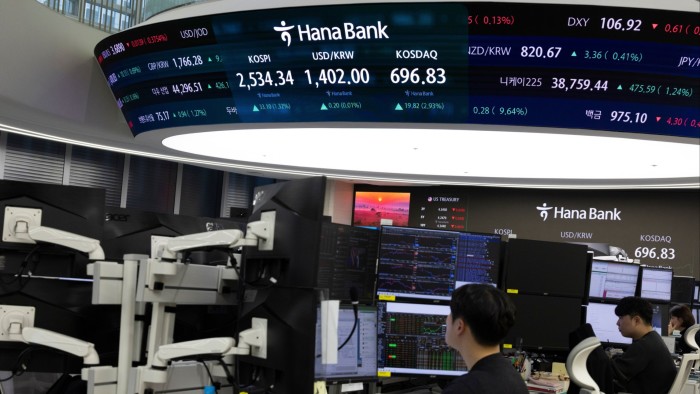
South Korean Investors Shift Focus: Why US Equities Are Gaining Traction
As the South Korean stock market struggles, a growing wave of local investors is turning their attention to US equities. This shift is not merely a trend; it reflects deep-seated concerns about the domestic market’s performance and the growing allure of American stocks. In this article, we will explore the reasons behind this shift, the implications for South Korean investors, and what this means for the future of investment strategies in the region.
The Current State of the South Korean Market
South Korea’s stock market has faced a series of challenges in recent years. High volatility, global economic uncertainties, and regulatory changes have contributed to a less favorable investment environment. Key indices such as the KOSPI have shown sluggish growth, prompting local investors to seek better opportunities elsewhere.
Recent reports indicate that the KOSPI index has struggled to break through significant resistance levels, leading to diminished investor confidence. The ongoing geopolitical tensions in the region, coupled with the effects of inflation and rising interest rates, have further exacerbated the situation. As a result, many are questioning whether the domestic market can provide the returns they desire.
The Appeal of US Equities
In stark contrast, US equities are experiencing a period of remarkable growth. Several factors contribute to this increasing interest among South Korean investors:
- Robust Economic Recovery: The US economy has shown resilience, bouncing back from the pandemic with strong consumer spending and job growth.
- Diverse Investment Options: The US stock market offers a wide array of sectors and industries, allowing investors to diversify their portfolios more effectively.
- Global Brands and Technology: Many of the world’s leading technology companies, such as Apple, Amazon, and Google, are based in the US. Their innovation and market dominance attract investors looking for growth.
- Stable Regulatory Environment: The US is perceived as having a more stable regulatory framework, which instills confidence in both local and foreign investors.
This combination of factors has made US equities increasingly attractive to South Korean investors who are seeking to maximize their returns and mitigate risks associated with their domestic market.
Investor Behavior and Trends
As South Korean investors shift their focus, a few noteworthy trends are emerging:
- Increased Participation in Global Markets: More South Korean retail investors are opening brokerage accounts that allow them to trade US stocks, resulting in a significant uptick in trading volumes.
- Utilization of Technology: The rise of fintech platforms has made it easier for investors to access US markets, with many apps providing real-time trading and investment analysis.
- Focus on Long-Term Growth: Many investors are now prioritizing long-term investment strategies over short-term gains, looking at established US companies as stable growth options.
This shift in investor behavior not only reflects a change in strategy but also highlights the increasing globalization of investment practices.
Potential Challenges and Considerations
While the allure of US equities is undeniable, South Korean investors should also be aware of potential challenges:
- Currency Risk: Investing in US stocks exposes investors to fluctuations in the exchange rate between the South Korean won and the US dollar, which can impact returns.
- Tax Implications: Understanding the tax obligations associated with foreign investments is crucial, as it may affect overall profitability.
- Market Volatility: The US stock market, while robust, can also experience significant fluctuations, especially in response to economic data releases or geopolitical events.
Investors need to weigh these factors carefully and consider how they fit into their overall investment strategy.
The Future of Domestic Investments
As more South Korean investors turn to US equities, questions arise about the future of domestic investments. Will this trend lead to a long-term decline in interest in the South Korean market, or can the domestic landscape adapt to retain investors?
There are several possibilities:
- Innovation and Growth: The South Korean government and businesses may need to focus on innovation and growth sectors, such as technology and renewable energy, to attract investors back.
- Regulatory Improvements: Streamlining regulations and improving investor protection could enhance confidence in the local market.
- Education and Resources: Providing better resources for investors to understand and navigate the complexities of the domestic market may help retain interest.
Ultimately, the South Korean market’s ability to adapt will determine its competitiveness against the allure of US equities.
Conclusion
The shift of South Korean investors toward US equities is indicative of broader market trends and changing investor preferences. As the local market faces challenges, the stability and growth potential of US stocks present a compelling alternative. While there are risks associated with this transition, the increasing access to global markets and innovative investment platforms positions South Korean investors to thrive.
As we move forward, it will be essential for both individual and institutional investors in South Korea to stay informed, continuously evaluate their strategies, and embrace the opportunities that arise in both domestic and international markets. The landscape of investing is ever-evolving, and adaptability will be key to capitalizing on future growth, whether it’s in South Korea or the United States.
See more CNBC Network