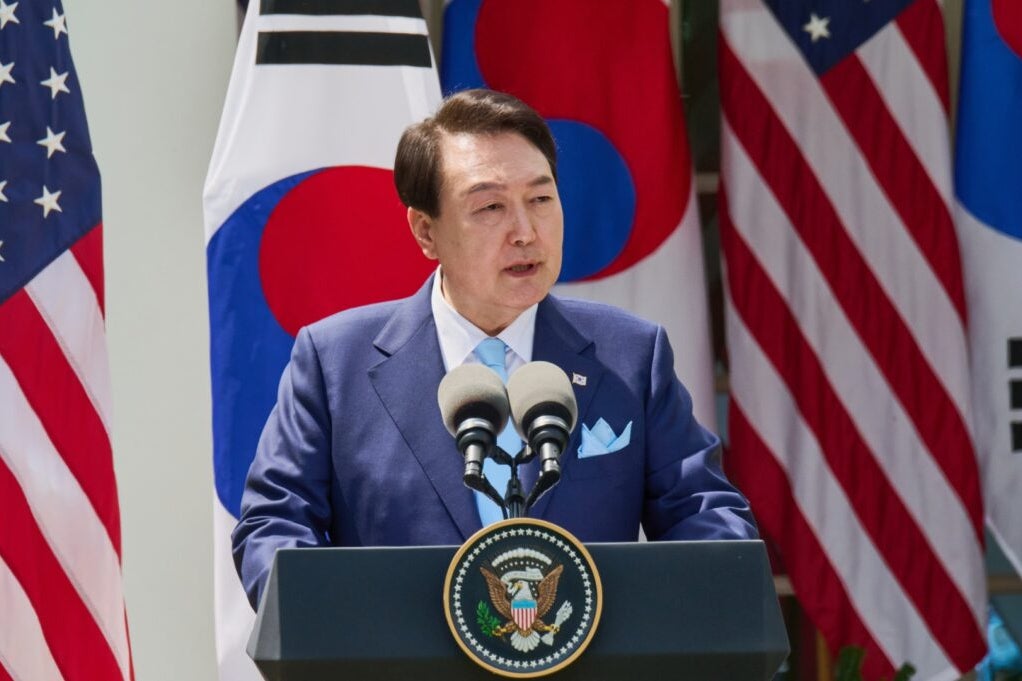
The financial markets of South Korea were shaken recently by the unexpected announcement of a martial law declaration by President Yoon Suk-yeol. This drastic move, aimed at restoring order and safeguarding the constitutional democratic framework of the country, has sent shockwaves through both domestic and international markets, leading to a sharp decline in South Korean Exchange-Traded Funds (ETFs). In this article, we will explore the significant implications of the martial law declaration on South Korean ETFs, analyze the factors contributing to the market’s instability, and provide a broader perspective on how this event may affect South Korea’s political and economic future.
South Korean ETFs Plunge Following Martial Law Declaration
The news of South Korean ETFs experiencing a sharp plunge comes amid a tumultuous period for the country’s political and economic landscape. ETFs, a popular investment vehicle for both institutional and retail investors, track the performance of a specific index, sector, or commodity. The sudden downturn in these financial instruments highlights the growing uncertainty surrounding the country’s economic stability in light of the government’s emergency measures.
South Korea’s ETF market, which represents a wide array of sectors including technology, manufacturing, and finance, saw a notable sell-off in the wake of President Yoon’s decision to impose emergency martial law. With investor sentiment already fragile due to ongoing political tensions, the declaration of martial law raised questions about the future direction of South Korea’s democracy, rule of law, and its economic resilience.
The Announcement: What Led to Martial Law?
President Yoon’s martial law declaration came after months of political unrest and rising tensions between the executive branch and opposition parties. While the government portrayed the move as necessary to stabilize the nation’s democratic order, critics argued that it could potentially undermine South Korea’s democratic institutions. The martial law measure is typically reserved for extreme national crises, such as armed conflicts or civil unrest, which raised alarm bells among market observers and analysts.
In his address, President Yoon explained that the declaration of martial law was intended to protect the constitution and preserve public order in the face of escalating protests and disruptions. However, this led to fears of an erosion of civil liberties and a possible escalation of political violence. The international community, including foreign investors, expressed concern about the long-term consequences of such an action, leading to an immediate decline in market confidence.
The Impact on South Korean ETFs and Market Sentiment
The reaction of the South Korean ETF market to the martial law declaration was swift and severe. ETFs, which are commonly used to gain exposure to the South Korean stock market, witnessed a sharp drop as investors scrambled to offload their holdings in response to fears of increased political instability. The KOSPI 200 ETF, which tracks the performance of South Korea’s largest companies, dropped by over 4%, while other sector-specific ETFs, such as those focused on technology and consumer goods, saw declines of similar magnitude.
The declines in ETFs were exacerbated by the broader sell-off in South Korean stocks, which fell to their lowest levels in several months. South Korea’s currency, the won, also weakened against major currencies like the US dollar, further intensifying investor concerns. These financial market reactions underscore the significant impact that political developments can have on investor sentiment, particularly in a country as integrated into global trade and investment as South Korea.
Why South Korean ETFs Are Especially Vulnerable
ETFs are often viewed as more sensitive to geopolitical events than individual stocks. This is because ETFs represent a broad cross-section of the economy, and any disruption in the political or economic environment can lead to widespread sell-offs. The South Korean ETF market, in particular, is heavily weighted in sectors like technology and consumer electronics, which are particularly vulnerable to changes in domestic stability.
- Technology Sector: South Korea is home to global tech giants such as Samsung Electronics and SK Hynix, which are major components of various ETFs. Any political instability or disruptions in supply chains can severely impact the performance of these companies, causing their stock prices to fall.
- Manufacturing and Exports: South Korea’s economy is heavily reliant on exports, and disruptions in the political environment can undermine investor confidence in the stability of the country’s trade policies, particularly with its key trading partners such as China and the United States.
- Market Sentiment and Foreign Investment: South Korea has long been an attractive destination for foreign investors due to its advanced technological sector and economic resilience. However, events like a martial law declaration can cause foreign capital to withdraw, exacerbating downward pressure on the market.
Broader Implications: What’s at Stake for South Korea’s Political and Economic Future?
The political and economic fallout from President Yoon’s martial law declaration extends beyond the immediate decline in ETF values. Several key issues have emerged as a result of this unprecedented decision:
1. Erosion of Democratic Institutions
One of the most significant concerns is the potential erosion of South Korea’s democratic institutions. While the South Korean constitution guarantees civil liberties and democratic processes, the imposition of martial law could be seen as a step toward authoritarianism, especially if it is not accompanied by clear checks and balances. A prolonged period of emergency rule could set a dangerous precedent, undermining public trust in the government and democratic institutions.
2. Long-Term Economic Consequences
South Korea’s economy is deeply integrated into the global economy, with its export-driven model reliant on stability and predictability. The martial law declaration creates a high level of uncertainty, potentially deterring both domestic and international investment. Companies operating in South Korea, particularly those in the technology and automotive sectors, may reconsider their operations in the country if the political environment becomes too unstable. The knock-on effect could be felt in the form of job losses, lower consumer spending, and a slowdown in economic growth.
3. Regional Implications
South Korea’s geopolitical positioning adds another layer of complexity to the situation. As tensions between North and South Korea remain high, the declaration of martial law could signal a shift in the country’s security priorities. There are fears that such a move might lead to greater militarization and possibly exacerbate tensions with North Korea. The international community, including the United States, Japan, and China, will be closely monitoring the situation, as any escalation could have serious ramifications for regional stability.
Investor Strategies Amid Uncertainty
For investors holding South Korean ETFs, this period of uncertainty presents both risks and opportunities. While the market may experience short-term volatility, long-term investors may view this as a potential buying opportunity, particularly if they believe in the resilience of South Korea’s economy. On the other hand, more risk-averse investors may choose to diversify their portfolios away from South Korea in the short run to avoid potential losses due to ongoing political instability.
Investors are also advised to stay informed about developments on the ground in South Korea, as the government’s response to the crisis and any eventual resolution of the martial law situation could significantly influence the outlook for the country’s ETFs. Additionally, geopolitical risk hedging strategies, such as diversifying into other regional markets or commodities, may help mitigate exposure to South Korea’s current instability.
The unexpected declaration of martial law by President Yoon Suk-yeol has created a wave of uncertainty across South Korea’s financial markets, with ETFs bearing the brunt of investor concerns. As the situation continues to unfold, it is clear that both the political and economic future of South Korea is at a crossroads. While some may view the martial law declaration as a necessary measure to restore order, others fear it could mark the beginning of a more authoritarian era, which would have far-reaching consequences for the nation’s democracy and economic stability.
For investors, the current climate is one of heightened caution. The risks associated with South Korean ETFs have surged, and the potential for further market declines remains on the table. However, history has shown that markets can rebound from crises, especially if the government can restore order and instill confidence among both domestic and international stakeholders. As such, careful monitoring of political developments and market trends will be crucial for investors looking to navigate this challenging environment.
For more insights into the evolving political situation in South Korea, visit Reuters.
See more CNBC Network